

Pink sapphire: the same mineral as ruby, and where padparadscha begins
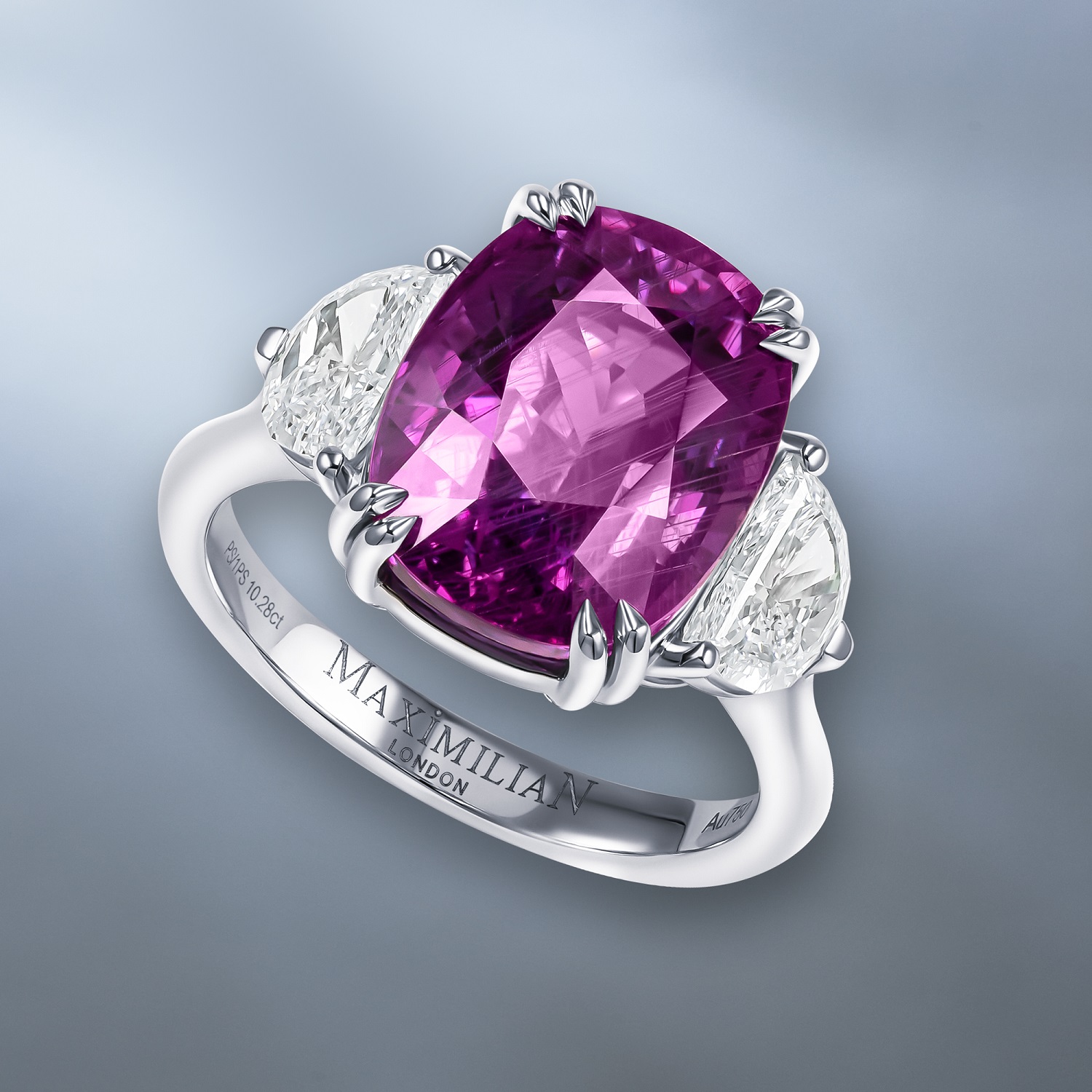
Pink sapphire is a gem variety of corundum, the same mineral as ruby. Pure corundum is colourless, and chromium gives ruby its red and pink sapphire its pink. The borderline between ruby and pink sapphire is debated in the trade and interpreted differently across cultures. Padparadscha is the light to medium pinkish orange to orange-pink variety, and GIA uses the name only when the colour is acceptable after a stability test.
One mineral, many colours
Ruby and sapphire are gem varieties of the same mineral, corundum. In its purest form corundum is colourless; trace elements that become part of its crystal structure cause the variations in its colour.
Chromium is the element behind both the red of ruby and the pink of pink sapphire. The difference between the two lies in the colour itself, not in the mineral.
Where pink sapphire ends and ruby begins
GIA notes that some gem dealers debate the borderline between ruby and pink sapphire, and that there are cultural differences in how ruby and pink sapphire are interpreted.
Naming follows colour. SSEF reserves the word sapphire without a colour prefix for the blue variety of corundum, coloured by iron and titanium; a pink stone is described as a pink sapphire.
Padparadscha: the pinkish orange variety
Those who deal in these gemstones usually agree that padparadscha sapphires should range from light to medium pinkish orange to orange-pink.
Some pink sapphires can be charged with UV light to show a temporary orangy pink to pinkish orange colour in the padparadscha range. After a few hours of intense incandescent light, the unstable orange component fades and the stone returns to pink. For this reason GIA performs a colour stability test, and a sapphire is characterised as padparadscha only if its colour is acceptable after that test.
Heating and diffusion
Low-temperature heat treatment is often applied to gem corundum to improve its appearance. GIA has documented pink sapphires from Ilakaka, Madagascar, that underwent low-temperature heat treatment.
Lattice diffusion is a different process: it uses heat and chemicals to diffuse an element into a gemstone and artificially change its colour. Many beryllium-diffused sapphires were mistaken for natural padparadschas, and the treatment was initially hard to detect because the colouring agent penetrates deeply into the stone. GIA does not apply the padparadscha characterisation to beryllium-diffused sapphires.
What a GIA report tells you
A GIA Identification Report describes whether the stone is natural or laboratory-grown, identifies the type of gemstone and includes any detectable treatments. GIA also offers an Identification Report with geographic origin added, and origin is provided for certain stones when determinable.
GIA does not grade or provide quality analysis for sapphire or other coloured stones. Each stone is examined by one gemologist and then passed to a second, who independently performs all necessary observations and testing.
- Natural or laboratory-grown.
- The type of gemstone, such as pink sapphire or padparadscha sapphire, both varieties of corundum.
- Any detectable treatment, such as heat or diffusion.
- Geographic origin, where it has been requested and can be determined.
Questions
Is pink sapphire the same as ruby?
They are the same mineral, corundum, and chromium colours both. Ruby is the red variety and pink sapphire the pink one; the borderline between them is debated in the trade and read differently across cultures.
What makes a sapphire pink?
Chromium. Pure corundum is colourless, and chromium in its crystal structure causes the pink of pink sapphire, as it causes the red of ruby.
What is the difference between pink sapphire and padparadscha?
Padparadscha ranges from light to medium pinkish orange to orange-pink. GIA characterises a sapphire as padparadscha only if its colour is acceptable after a stability test, and not if it has been beryllium-diffused.
Are pink sapphires heated?
Low-temperature heat treatment is often applied to gem corundum, including pink sapphires, to improve its appearance. A GIA Identification Report lists any detectable treatment.
Does GIA grade pink sapphires?
No. GIA does not grade or provide quality analysis for coloured stones. Its Identification Report identifies the stone, states whether it is natural or laboratory-grown and lists detectable treatments; a version with geographic origin added is available, with origin provided for certain stones when determinable.
Read next
Sources
- Geology of Corundum and Emerald Gem Deposits (Gems & Gemology)
- Ruby (GIA)
- Ruby Description (GIA)
- Sapphire Description (GIA)
- Ruby Quality Factors (GIA)
- Sapphire Quality Factors (GIA)
- Sapphire Reports (SSEF)
- An Update on Sapphires with Unstable Color (GIA)
- Ilakaka Pink Sapphires and Heat Treatment (Gems & Gemology)
- Sapphire Buyer's Guide (GIA)
- Beryllium in Sapphire (Gems & Gemology)
- Coloured Stone Reports (GIA)
- Sample Identification Report (GIA)
- Coloured Stone Analysis Report Service (GIA)
- Does GIA Grade Sapphires? (GIA FAQ)
- How GIA Identifies a Coloured Stone (GIA)
