

Mozambique ruby: the deposit, the colour and how it compares with Burmese ruby
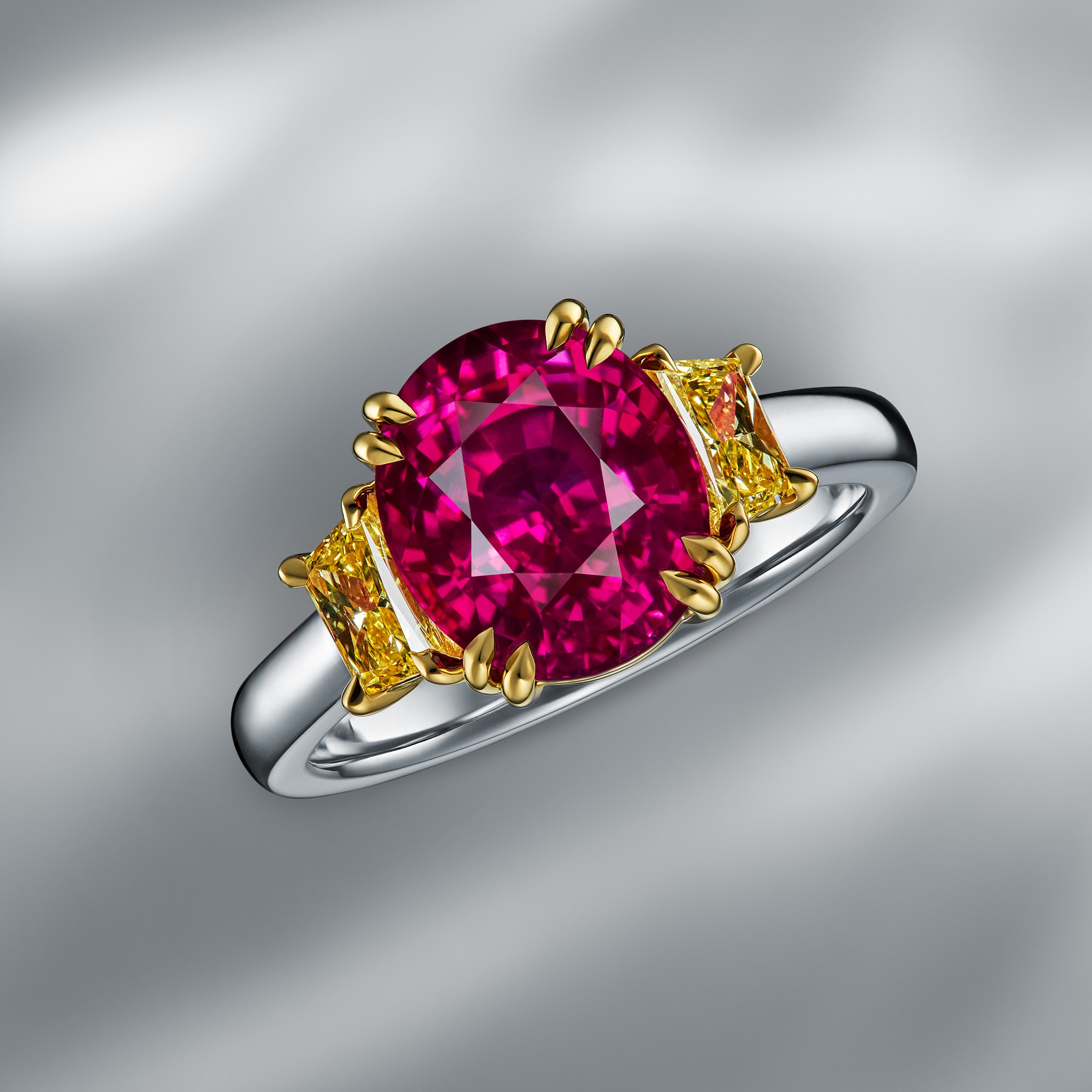
Mozambique ruby comes from the Montepuez area of Cabo Delgado Province, where rubies were discovered in April 2009. In 2020, SSEF identified Montepuez as the most significant source of gem-quality ruby on the market during the preceding decade. Its red comes from chromium, as in all ruby, and laboratories assess its origin from inclusions and trace-element chemistry. GRS reports that some vivid red Mozambique and Burmese rubies show indistinguishable colours when graded in daylight, and lists Mozambique among the sources of its pigeon blood designation.
A discovery of the twenty-first century
In April 2009, rubies were discovered near the city of Montepuez in Cabo Delgado Province, in the north of Mozambique.
Within a decade the deposit had changed the market. In 2020, SSEF identified rubies from Montepuez as the most significant source of gem-quality rubies in the market during the preceding decade.
Two kinds of deposit, two kinds of ruby
GIA reports that rubies are found in two types of environments around Montepuez: primary and secondary. The host complex underwent amphibolite-grade metamorphism.
Rough from the secondary deposit is generally more tumbled, more transparent and less included than material from the primary rock.
Two types of ruby are also distinguished by mine. Material from Maninge Nice looks purplish red to red, while the second type, called Mugloto, has been mined since 2012.
Where the red comes from
According to GIA, chromium is the trace element that causes ruby's red, which ranges from an orangy red to a purplish red. Chromium can also cause fluorescence, which adds to the intensity of the red.
Iron works the other way. SSEF explains that the strong fluorescence expected of its pigeon blood red term is caused by high chromium content combined with low iron content.
Mozambique and Burmese ruby
Classic Burmese ruby grows in marble. GIA notes that low-iron rubies from marble deposits such as Myanmar can show particularly strong fluorescence.
Colour alone does not separate the two origins. GRS states that some vivid red pigeon's blood colours from Mozambique and Burma cannot be distinguished if graded in daylight.
Fluorescence is not proof of origin either: GIA writes that fluorescence testing must be used in combination with other methods to determine a ruby's origin accurately.
How a laboratory recognises Mozambique ruby
For many stones, GIA states, inclusion scenes and trace-element chemistry are enough to determine a geographic origin accurately.
Common mineral inclusions in Mozambique rubies are greyish green amphiboles and hexagonal mica booklets with stress fracture fringes. A more recent GIA study adds bands of fine silk, short needles and particles, including reflective platelets.
Treatment: what the report must say
SSEF lists the treatments found in ruby: fissure filling (for example with oil), heating, heating with a flux, heating with lead glass filling and diffusion treatment.
Mozambique ruby can also be heated at fairly low temperatures. GIA's experiments showed that such heating could reduce the blue component and move the colour from purplish red to a purer red. SSEF detects such heating through careful microscopic observation combined with analytical data, mostly FTIR.
GIA describes glass filling as a common and much less durable treatment. The laboratory's treatment disclosure therefore matters both for the nature of the stone and for its durability.
Can a Mozambique ruby be pigeon blood?
Yes, where the laboratory's criteria are met. GRS states that rubies qualifying for its pigeon blood designation may be found in various sources, including Burma (Myanmar), Mozambique and Madagascar.
Each laboratory applies its own criteria for colour, fluorescence and treatment, so the term should always be read together with the name of the laboratory that issued it.
- Origin: stated on the report as the laboratory's opinion, based on inclusions and chemistry.
- Treatment: no indications of heating, heating, or filling, as disclosed by the laboratory.
- Colour term: which laboratory applied it, and under which criteria.
- The stone itself: a pure, vivid red seen in person.
Questions
Where do Mozambique rubies come from?
From the Montepuez area of Cabo Delgado Province in northern Mozambique, where rubies were discovered in April 2009. They are found in both primary and secondary deposits.
Are Mozambique rubies good quality?
Quality varies from stone to stone, as with any origin. In 2020, SSEF identified Montepuez as the most significant source of gem-quality rubies during the preceding decade, and GRS reports that some vivid red pigeon's blood colours from Mozambique and Burma cannot be distinguished when graded in daylight.
Which is better, Mozambique or Burmese ruby?
Neither origin guarantees quality on its own. Low-iron Burmese rubies from marble can show particularly strong fluorescence, while GRS reports that some vivid red Mozambique rubies cannot be distinguished from Burmese ones in daylight colour. Each ruby is assessed individually for colour, clarity, cut and treatment, with the laboratory report documenting the findings.
How can you tell a Mozambique ruby?
Origin requires specialist gemmological examination, and even a laboratory may find it inconclusive. GIA uses inclusion scenes and trace-element chemistry; typical inclusions in Mozambique rubies include amphiboles, mica booklets, fine silk and reflective platelets.
Can a Mozambique ruby be called pigeon blood?
Yes, if it meets the laboratory's criteria. GRS lists Mozambique among the sources of its pigeon blood designation. Each laboratory defines the term differently.
In detail: Pigeon blood ruby: what the term means and how laboratories apply it →
Read next
Sources
- A Decade of Ruby from Mozambique: A Review (Gems & Gemology)
- Mozambique: A Ruby Discovery for the 21st Century (Gems & Gemology)
- Mozambique Expedition: A Ruby Discovery (GIA)
- Update on Unheated Mozambique Rubies (SSEF)
- Ruby Description (GIA)
- Fluorescence and Phosphorescence (Gems & Gemology)
- Summary of Gem Fluorescence (GIA)
- Ruby Geographic Origin Determination (Gems & Gemology)
- Update on Inclusions in Mozambican Rubies (Gems & Gemology)
- Low-Temperature Heat Treatment of Mozambican Ruby (GIA)
- Ruby Reports (SSEF)
- Low-Temperature Heated Rubies from Mozambique (SSEF)
- Royal Ruby (GIA)
- Pigeon's Blood and Royal Blue: an International Colour Standard (GRS)
- GRS-type Pigeon Blood Ruby (GRS)
- Colour Terms (SSEF)
