

Aquamarine: emerald's blue sister, and how to tell it from blue topaz
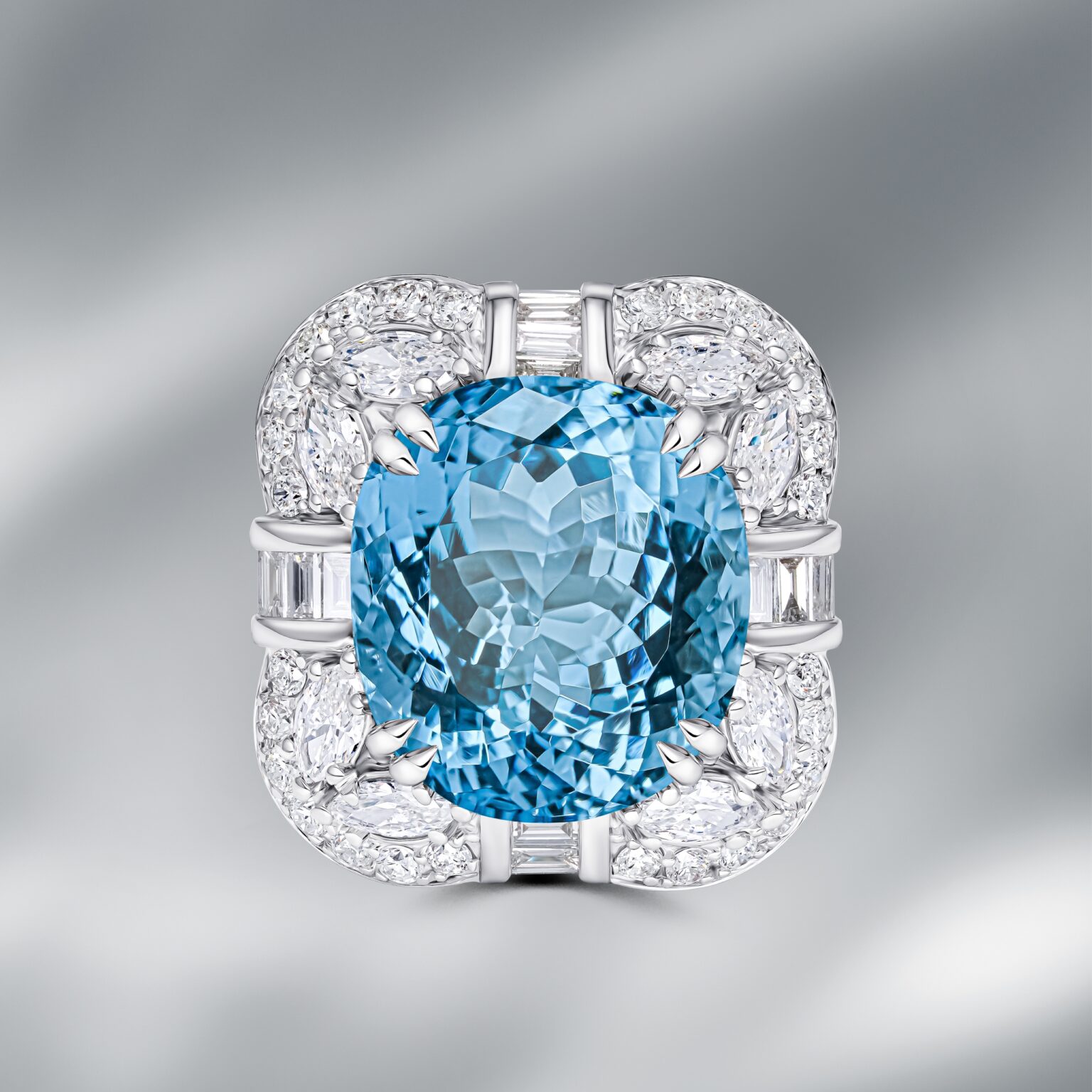
Aquamarine is a colour variety of the mineral beryl, the same mineral as emerald, and it is coloured by iron ions. GIA describes the most prized colour as a dark blue to slightly greenish blue of moderately strong intensity. Most aquamarine on the market has been heated for a purer blue, and the treatment is stable. Blue topaz is a different mineral, which can be turned blue by irradiation and heat treatment; the two have different refractive indices, and a laboratory confirms identity with microscopic examination and further tests.
A variety of beryl, coloured by iron
Like emerald, aquamarine is a colour variety of the mineral beryl. Aquamarine is coloured by iron ions, an important colouring agent for beryl.
Aquamarine is 7.5 to 8 on the Mohs scale. It is a durable gemstone for jewellery, provided it is protected against scratching and hard knocks.
Which blue is most prized
GIA describes the gem's most prized colour as a dark blue to slightly greenish blue with moderately strong intensity. In general, the purer and more intense the blue, the more prized the stone.
Most cut aquamarines are eye-clean. Because the colour is light, cutting matters: a well-cut aquamarine shows brilliance. Stones from some mines in Africa, such as Nigeria, Madagascar and Mozambique, are known for intense colour in sizes under 5 carats.
Santa Maria: the name for a pure blue
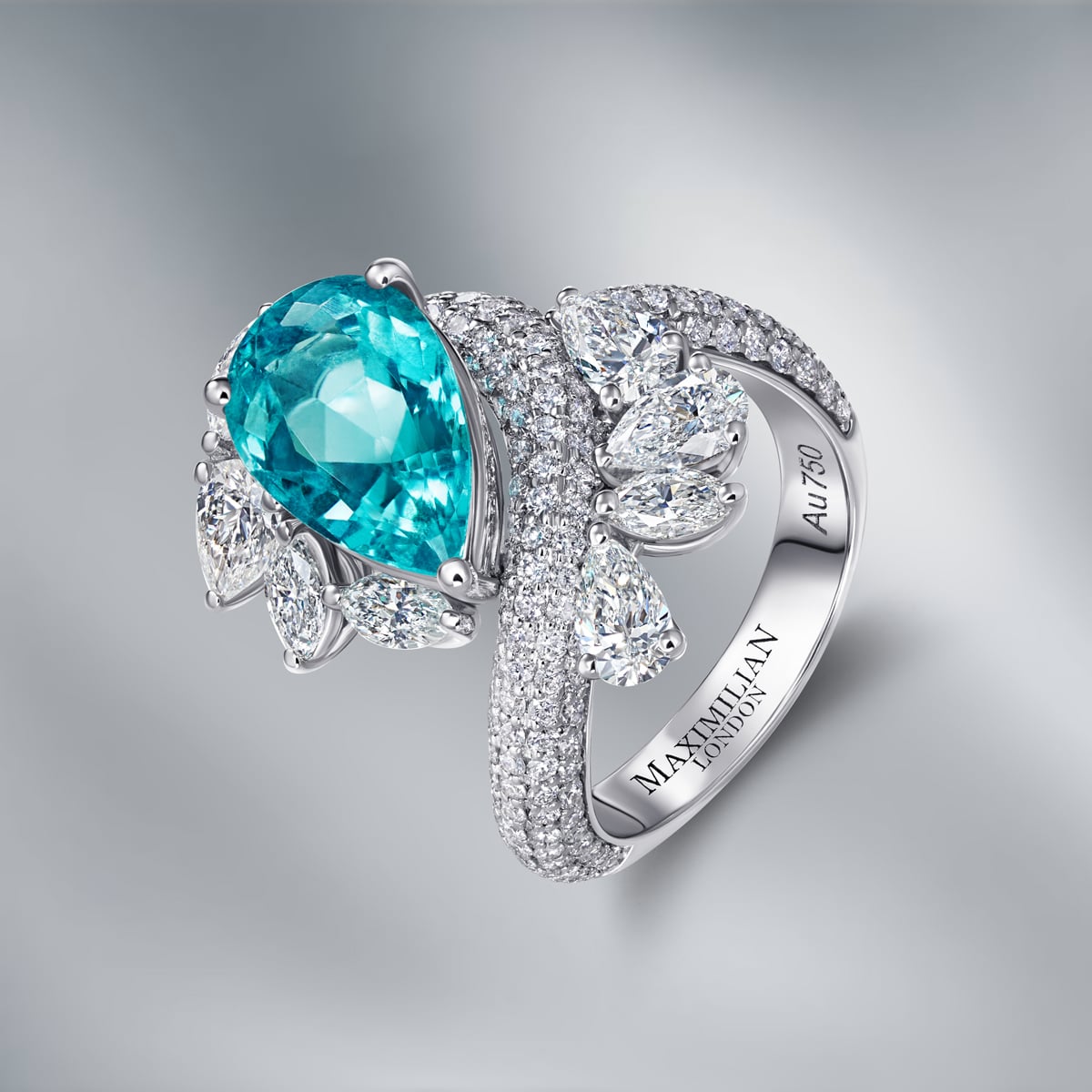
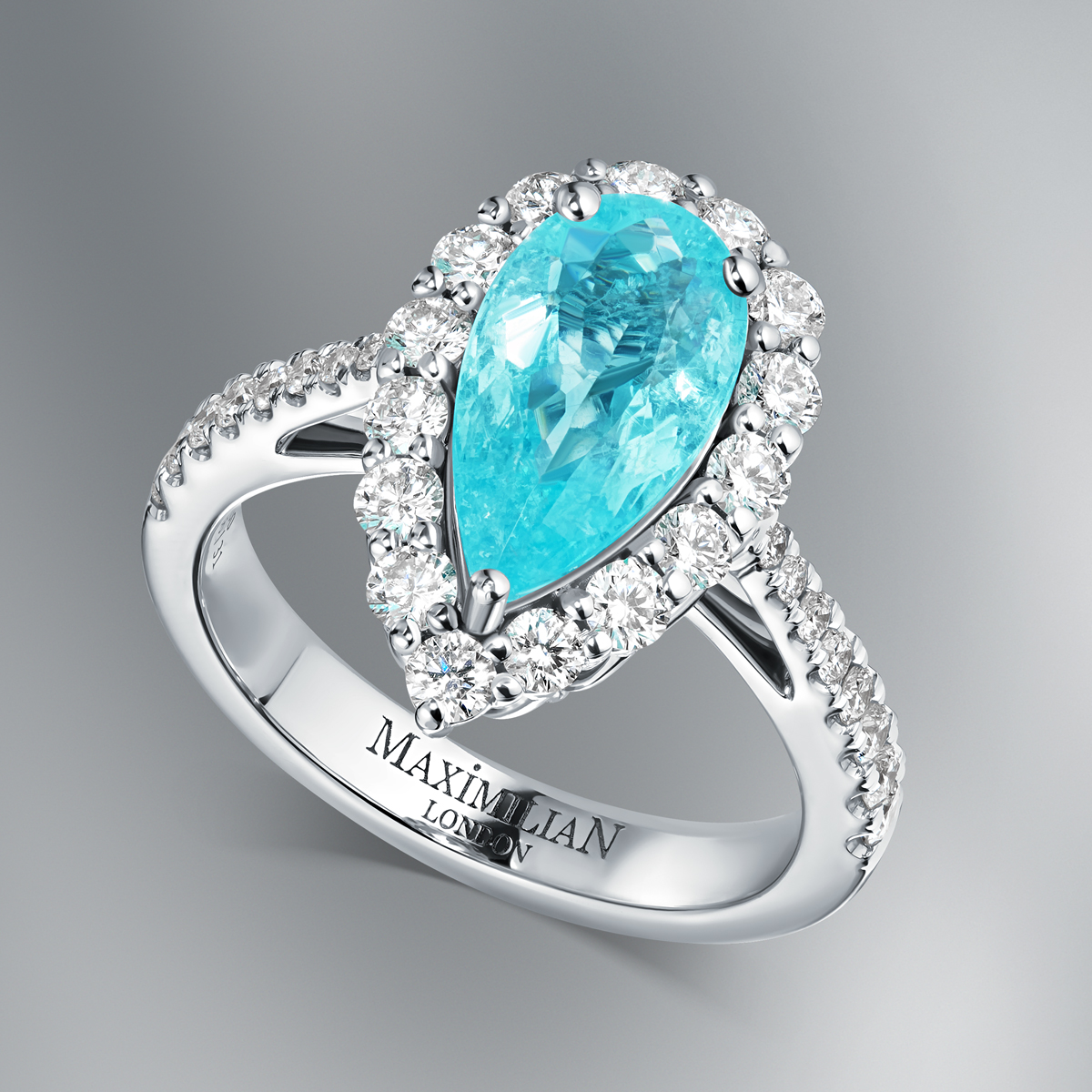
Santa Maria describes a coveted pure blue with no hint of green or yellow. The name refers to a mine near Santa Maria de Itabira in Minas Gerais, Brazil.
The Brazilian state of Minas Gerais has been an important source of aquamarine for the past two centuries; aquamarine is also found high in the Karakorum foothills of Pakistan and mined in Kenya, Madagascar, Nigeria, Zambia and Mozambique.
Heating for a purer blue
Although some buyers prefer the more greenish natural colour, most of the aquamarine on the market has been heat-treated to give it a purer blue. GIA notes that heat treatment of aquamarine is stable.
Aquamarine and blue topaz
Blue topaz is a different mineral. Colourless topaz can be irradiated, and in conjunction with heat treatment a variety of strong blue colours can be achieved; irradiating colourless topaz with electrons creates a sky blue.
Colour alone does not separate the two. Their refractive indices differ: 1.577 to 1.583 for aquamarine, 1.619 to 1.627 for topaz. A GIA gemologist performs a microscopic examination and all the tests required to determine a stone's gemological identity and detect any treatments.
What a GIA report states
GIA coloured stone reports describe the type of gemstone, whether it is natural or synthetic, and any detectable treatments. Every report also records the cutting style, shape, weight, measurements, colour and a photograph of the stone.
- The type of gemstone: beryl, variety aquamarine.
- Natural or synthetic.
- Any detectable treatment.
- Cutting style, shape, weight, measurements, colour and a photograph.
Wearing and caring for aquamarine
Warm soapy water is always a safe way to clean aquamarine. Ultrasonic and steam cleaning is usually safe unless the stone has liquid inclusions or fractures.
Aquamarine is the birthstone for March and the gem of the 19th wedding anniversary.
Questions
Is aquamarine related to emerald?
Yes. Both are colour varieties of the mineral beryl. Iron colours aquamarine blue.
In detail: Colombian emeralds: how to choose one and what to check →
What is the best colour of aquamarine?
GIA describes the most prized colour as a dark blue to slightly greenish blue with moderately strong intensity. The purer and more intense the blue, the more prized the stone.
What does Santa Maria aquamarine mean?
A pure blue with no hint of green or yellow. The name refers to a mine near Santa Maria de Itabira in Minas Gerais, Brazil.
Is aquamarine heat-treated?
Most aquamarine on the market has been heated to give it a purer blue. GIA notes that the treatment is stable.
How do you tell aquamarine from blue topaz?
They are different minerals with different refractive indices: 1.577 to 1.583 for aquamarine, 1.619 to 1.627 for topaz. Colourless topaz can be irradiated and heat-treated to produce strong blue colours. A laboratory confirms identity with microscopic examination and further tests.
Is aquamarine durable enough for everyday wear?
It is 7.5 to 8 on the Mohs scale and durable for jewellery, provided it is protected against scratching and hard knocks.
Read next
Sources
- Aquamarine (GIA)
- Aquamarine Quality Factors (GIA)
- Aquamarine Buyer's Guide (GIA)
- Aquamarine Care and Cleaning (GIA)
- Color Characteristics of Blue to Yellow Beryl from Multiple Origins (Gems & Gemology)
- Exceptional Red Spinels and Fine Aquamarine (Gems & Gemology)
- March Birthstones (GIA)
- Topaz (GIA)
- An Introduction to Gem Treatments (GIA)
- How GIA Identifies a Coloured Stone (GIA)
- Coloured Stone Reports (GIA)
