

Colombian emeralds: how to choose one and what to check
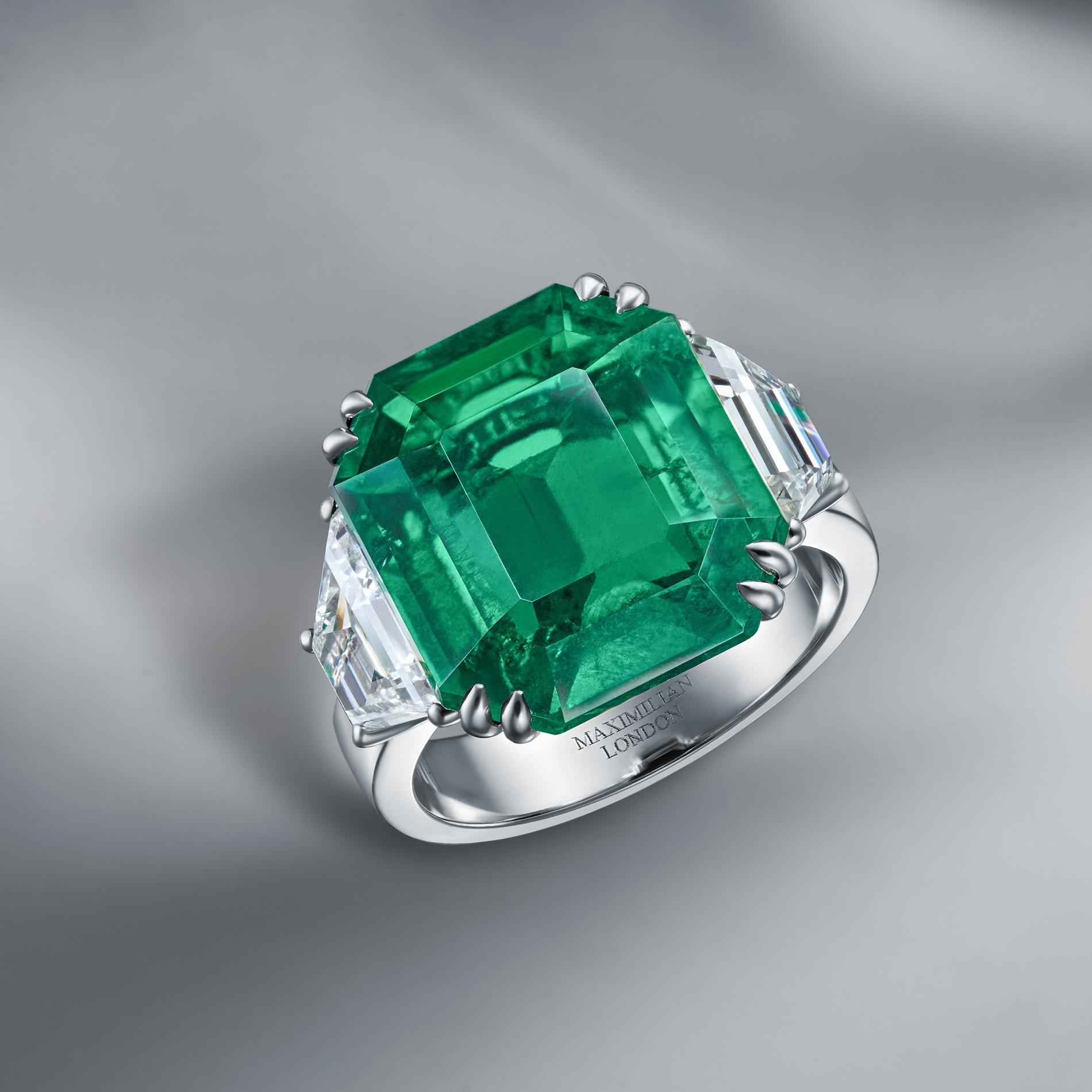
A Colombian emerald is judged first by its colour, then by its clarity and the degree of clarity enhancement, while its origin is a matter for a gemmological laboratory's expert opinion. Emerald is the green to bluish green variety of beryl, and Colombia's deposits lie in two belts of the Eastern Cordillera, among them Muzo, Coscuez and Chivor. Before choosing, read the laboratory report: it states whether the stone is natural, names detectable treatments and can give an opinion on origin.
What an emerald is
Emerald is the green to bluish green variety of the mineral beryl. Its colour comes from trace elements: GIA names chromium, vanadium and iron as the elements that cause it.
Everything else about the stone is read through that colour. In GIA's own words, emeralds are, most of all, about colour.
Where Colombian emeralds come from
Colombia's emerald deposits lie in two belts along the two boundaries of the Eastern Cordillera of the Andes.
On the western side lie the mining districts of Muzo, Coscuez, La Pita, Peñas Blancas and La Glorieta–Yacopi. Along the eastern belt are Gachalá, Chivor and Macanal.
A deposit unlike most others
Colombian emeralds occur in sedimentary rocks: organic-rich shales and limestones. Fractures in the shales allowed hydrothermal fluids to infiltrate and deposit emerald together with accompanying minerals.
GIA describes these deposits as unusual because there is no evidence of magmatic activity in their formation.
The same geology explains one of the most distinctive forms of the gem. Colombian trapiche emeralds, with a texture resembling a wheel with six spokes, are found exclusively in the black shales of the country's western emerald zone.
Colour comes first
According to GIA, the most desirable emerald colours are bluish green to pure green, with vivid saturation and a tone that is not too dark.
Colour should be judged before anything else, and in person: the hue, the strength of the colour and how dark the stone appears matter more than any single figure on paper.
Clarity and clarity enhancement
Emeralds typically contain inclusions that are visible to the unaided eye. This is expected of the gem and is not in itself a flaw to be avoided at all costs.
Clarity enhancement is the question to ask. Some estimates state that 90 percent or more of emeralds are fracture-filled, and the filling substance may be an oil or an artificial resin.
A laboratory report answers it. SSEF, for example, states the amount of filler present on its emerald reports: none, minor, moderate or significant.
Origin: what a laboratory can and cannot say
A classic microscopic feature of Colombian emeralds is the jagged three-phase fluid inclusion, which typically holds a small cubic crystal of halite and/or sylvite.
Such inclusions alone do not prove Colombian origin: jagged fluid inclusions are also seen in emeralds from deposits such as Afghanistan and China. Laboratories therefore combine careful observation of inclusions with spectroscopic analysis and trace-element measurements.
Even then, origin determination is an expert opinion, and a laboratory cannot issue a country-of-origin determination in every instance. A Colombian origin should rest on a laboratory's opinion, not on appearance alone.
Cut and size
Because of the shape of the crystal, emeralds are commonly cut as rectangular step cuts known as Emerald cuts. The Emerald cut can also help protect the stone, because its vulnerable corners are faceted.
Fashioned emeralds come in a wide range of sizes, so the choice of weight follows the jewel and the wearer rather than a fixed standard.
What to check before choosing
GIA evaluates emerald but does not grade it. Its Colored Stone Identification & Origin Report records the weight, measurements, shape, cutting style and colour, states whether the stone is natural or laboratory-grown, names any detectable treatments and can give an opinion on geographic origin when possible and requested.
Laboratory-grown emeralds exist, and laboratories have the tools to separate them: spectroscopy, for example, can help identify some flux-grown synthetic emeralds.
- Colour: bluish green to pure green, vivid, not too dark.
- Natural or laboratory-grown, as stated in the report.
- Clarity enhancement: whether the stone is filled and to what degree.
- Origin: a laboratory opinion, if the stone is described as Colombian.
- Care: it is risky to clean fracture-filled emeralds ultrasonically or with steam.
Questions
What makes Colombian emeralds distinctive?
They form in sedimentary rocks, shales and limestones, where hydrothermal fluids deposited emerald in fractures, without evidence of magmatic activity. They often show jagged three-phase fluid inclusions, and Colombian trapiche emeralds come only from the black shales of the western emerald zone.
Can a Colombian emerald be recognised by eye?
No. Origin determination is an expert opinion of a laboratory, based on inclusions, spectroscopy and trace-element chemistry. Jagged fluid inclusions are also seen in emeralds from Afghanistan and China.
Are emeralds usually treated?
Clarity enhancement is common: some estimates state that 90 percent or more of emeralds are fracture-filled, with oil or artificial resin. A GIA report names detectable treatments, and SSEF identifies the filling substance and states its amount, from none to significant.
How should an emerald be cleaned?
Fracture-filled emeralds should not be cleaned ultrasonically or with steam, as GIA considers this risky.
Sources
- Emerald Buyer's Guide (GIA)
- Emerald Quality Factors (GIA)
- Emerald Gem Overview (GIA)
- Colombian Emerald Industry: Winds of Change, Gems & Gemology (GIA)
- Colombian Trapiche Emeralds: Recent Advances in Understanding Their Formation, Gems & Gemology (GIA)
- Colombian Emerald Mining: Will the Giant Awaken?, Gems & Gemology (GIA)
- Geology of Corundum and Emerald Gem Deposits: A Review, Gems & Gemology (GIA)
- Geographic Origin Determination of Emerald, Gems & Gemology (GIA)
- Laboratory Growth of Gem Materials and the Attempt to Replicate Nature, Gems & Gemology (GIA)
- What Types of Stones Qualify for Country-of-Origin Reports? (GIA)
- Does GIA Grade Emerald? (GIA)
- Emerald Care and Cleaning Guide (GIA)
- Emerald (SSEF)
