

Canary diamond or yellow diamond: what the terms mean
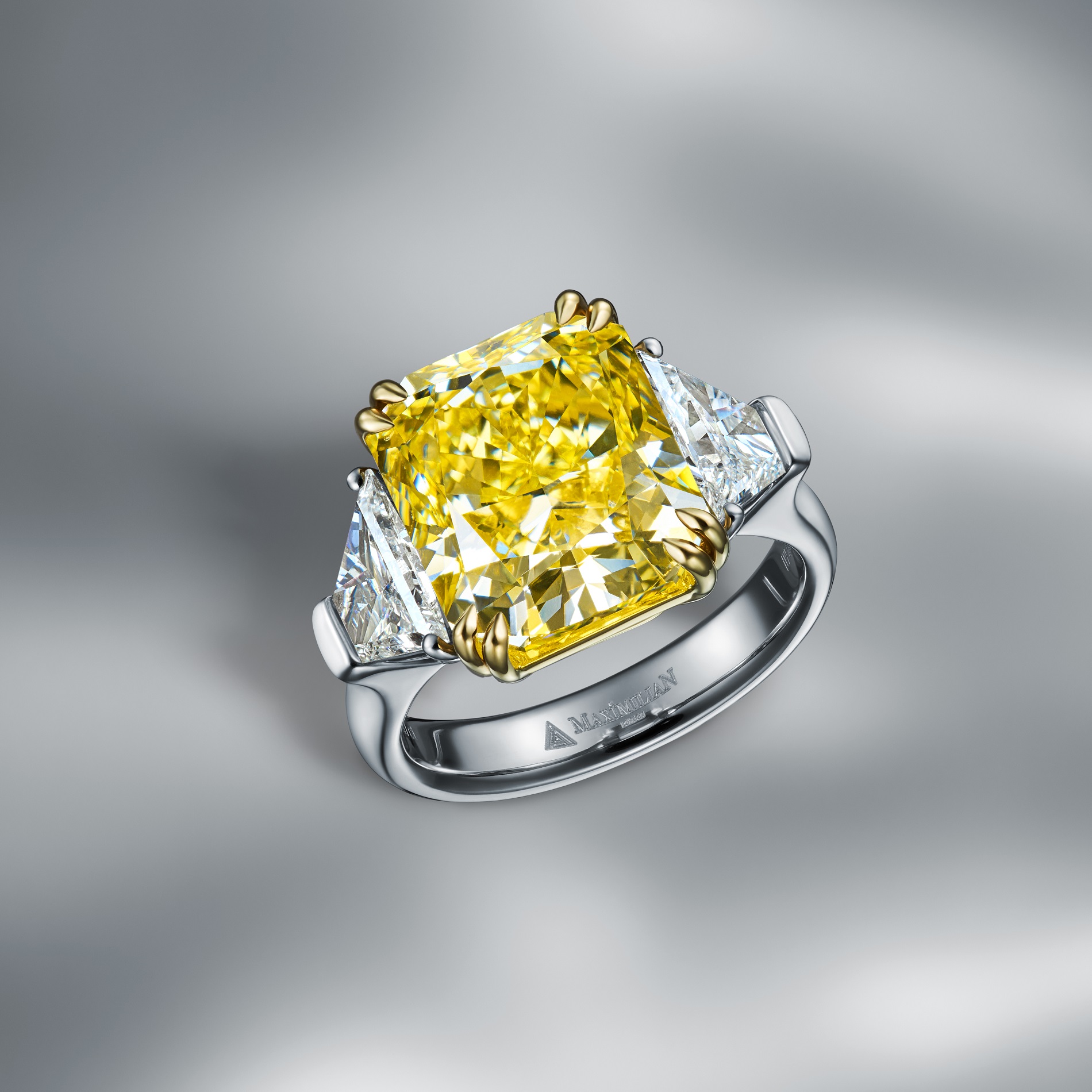
Canary is a trade word, not a grade. GIA states that it is not an accepted term used in grading yellow diamonds; historically it described intensely yellow type Ib stones. What a GIA report gives instead is a fancy colour grade, such as Fancy Light, Fancy, Fancy Intense or Fancy Vivid, judged by hue, tone and saturation, together with the origin of the colour.
Why a diamond is yellow
The colour comes from nitrogen. GIA notes that yellow diamonds contain trace elements of nitrogen, and that nitrogen atoms give rise to absorption in the blue region of the visible spectrum. When blue light is absorbed, the eye sees yellow.
How the nitrogen sits in the crystal matters. In type Ia diamonds it gathers in aggregated groups of atoms, in pairs or fours; one nitrogen-related defect, N3, three nitrogen atoms next to a vacancy, is an important cause of natural yellow colour. In type Ib diamonds the nitrogen atoms stand alone, as single substitutional atoms known as C-centres.
Cape yellow and the end of the D-to-Z scale
Most diamonds are graded on GIA's D-to-Z scale, which is based on the relative absence of colour. It begins at D, colourless, and ends at Z, light yellow or brown. A type Ia diamond with a distinct yellow body colour is the stone the trade calls cape yellow.
Beyond Z the logic reverses. Yellow diamonds with more colour than Z are graded differently and given a fancy colour grade: from that point the colour is no longer measured as a shortfall but described as a quality in its own right.
How GIA grades a fancy yellow
For fancy colour, GIA describes colour in terms of hue, the colour itself, tone, its relative lightness or darkness, and saturation, its intensity. Yellow diamonds occur in a wide range of saturations, which is why the grade terms matter so much for this colour.
GIA's fancy grades are Fancy Light, Fancy, Fancy Intense, Fancy Vivid, Fancy Dark and Fancy Deep. They describe combinations of tone and saturation rather than a simple scale of intensity. Each grade covers a range of colour sensations rather than one exact shade, so two stones with the same grade can still differ when set side by side.
Secondary hues: orangy, greenish and others
A yellow diamond's description may include a hue modifier, such as orangy yellow or greenish yellow. The modifier names a second colour present in the stone, while the last word names the dominant hue.
Reading the full colour description alongside the grade shows what the grade alone cannot: a Fancy Vivid orangy yellow and a Fancy Vivid greenish yellow have different hue components, and their colour appearance differs even within the same grade.
Canary: a trade word, not a grade
Yellow diamonds are sometimes marketed as canary, and the word is familiar to many buyers. GIA is explicit, however, that this is not an accepted term used in grading yellow diamonds.
Historically, canary referred to type Ib diamonds of intense yellow colour. Today canary is not part of GIA's colour grading terminology. To compare stones, rely on the fancy grade and the full colour description stated in the GIA report.
Why the cut changes the colour
A coloured diamond is usually cut to maximise the intensity of its colour rather than its light return. GIA's guidance is simple: the best cut is the one that gives the most attractive face-up colour.
This is why yellow diamonds are so often seen in mixed cuts. According to GIA, certain styles, typically mixed cuts like the Radiant, can intensify yellow colour, and the Cushion is another shape in which fancy intense yellow diamonds are found.
Natural or treated colour
Yellow can also be produced after mining. HPHT treatment can transform brownish diamonds into colours such as yellow, greenish yellow or green. Irradiation, most commonly by high-energy electrons, can produce different colours in diamonds, and it may be followed by annealing to enhance the colour further.
Coatings can create yellow as well, but they may wear off over time or be damaged by heat and chemicals. Fluorescence can offer a clue: natural cape diamonds may fluoresce blue, yellow or orange, while HPHT-treated yellow to green diamonds may show a chalky greenish yellow to yellow-green fluorescence under UV. Fluorescence alone cannot settle whether the colour is natural or treated: that requires examination by a gemmological laboratory.
What the GIA report tells you
A GIA coloured diamond report describes both the colour grade and the colour origin for natural coloured diamonds, and states whether any colour or clarity treatments are present.
For a yellow diamond, that is the document to read before the word canary: the fancy grade, the full colour description and the colour origin together describe the stone far more precisely than any trade name.
Questions
What is the difference between a canary diamond and a yellow diamond?
Canary is a trade word used in marketing yellow diamonds; GIA states it is not an accepted grading term. Historically it described intensely yellow type Ib diamonds. A GIA report describes a yellow diamond with a fancy colour grade and a colour description instead.
Is canary an official GIA colour grade?
No. GIA grades yellow diamonds beyond Z with fancy colour grades: Fancy Light, Fancy, Fancy Intense, Fancy Vivid, Fancy Dark and Fancy Deep.
What makes a diamond yellow?
Nitrogen. Nitrogen atoms in the crystal absorb light in the blue region of the visible spectrum, and the diamond appears yellow.
Where does a yellow diamond become a fancy colour diamond?
GIA's D-to-Z scale ends at Z, light yellow or brown. Yellow diamonds with more colour than Z receive a fancy colour grade.
How can I know whether the yellow colour is natural?
Treatments such as HPHT, irradiation and coating can create yellow. A GIA coloured diamond report states the colour origin and whether any colour or clarity treatments are present.
Sources
- Yellow Gemstones: Can You Identify Them? (GIA)
- Naturally Coloured Yellow and Orange Gem Diamonds (Gems & Gemology)
- Diamond Colour (GIA 4Cs)
- When does yellow become a positive colour factor? (GIA FAQ)
- Coloured vs D-to-Z diamond grading (GIA FAQ)
- Fancy Colour Diamond Buyer's Guide (GIA)
- Fancy Colour Diamond Quality Factors (GIA)
- How to Choose a Yellow Diamond Engagement Ring (GIA 4Cs)
- The Timeless Intrigue of Coloured Diamonds (GIA 4Cs)
- Cut proportions for coloured diamonds (GIA FAQ)
- Understanding Diamond Colour Grade (GIA 4Cs)
- HPHT-Treated Yellow to Green Diamonds (Gems & Gemology)
- Diamond Treatments (GIA 4Cs)
- Yearning for Yellow Diamonds (GIA 4Cs)
- Natural Coloured Diamond Reports (GIA)
