

Pink diamonds: why they are pink and how the colour is graded
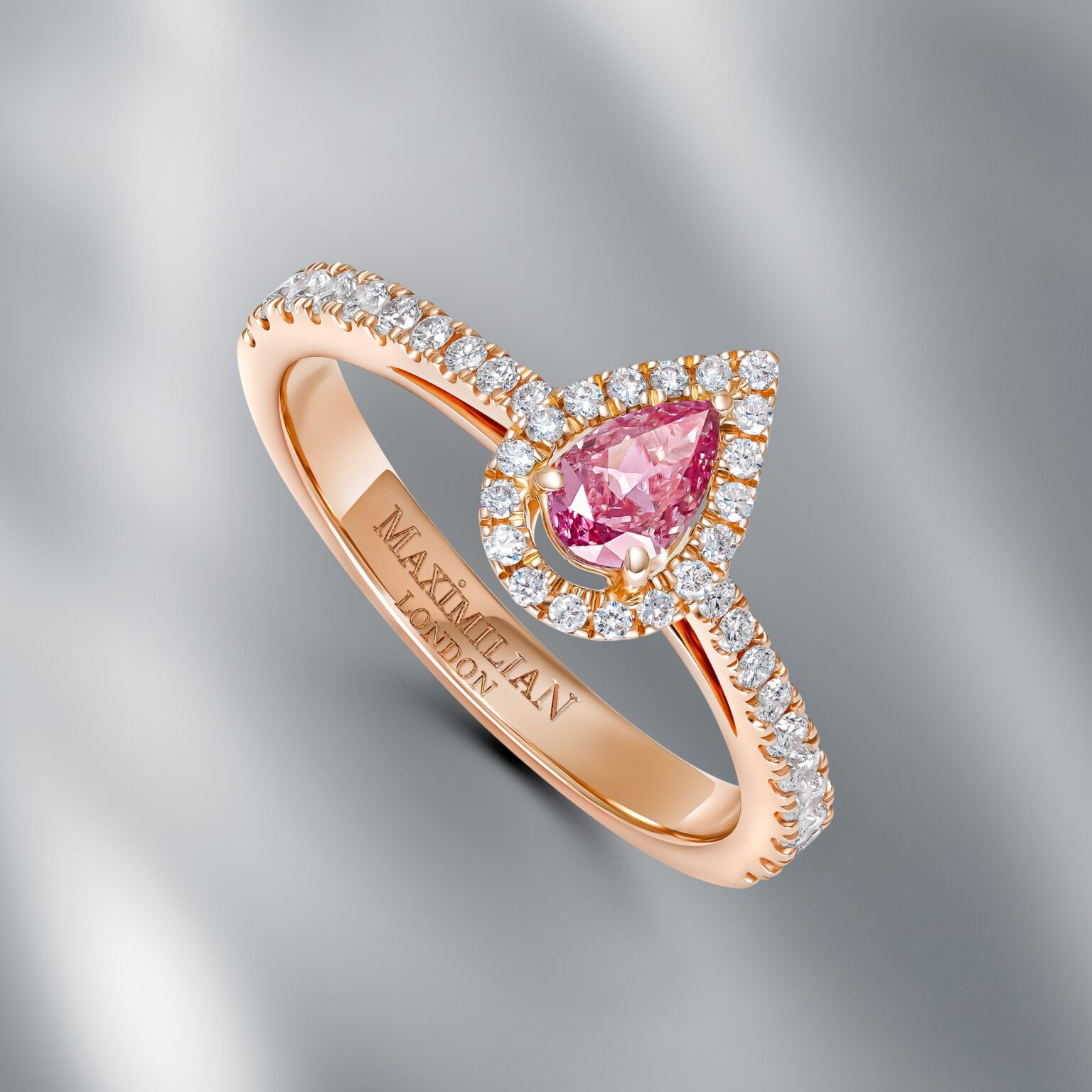
Almost every natural pink diamond owes its colour to its own crystal structure rather than to a trace element. GIA research shows that about 99.5% of natural pink diamonds get their colour from an absorption band centred on 550 nm, created when the diamond plastically deformed under high pressure and temperature. GIA grades that colour face-up by hue, tone and saturation, and its report states whether the colour is natural or treated.
Colour born of pressure
According to GIA, the overwhelming majority of natural pink diamonds, about 99.5%, get their colour from an absorption band centred on 550 nm.
That band is created when the diamond experiences stresses at high pressure and temperature and plastically deforms. GIA researchers put it plainly: plastic deformation is associated with the vast majority of diamonds with these colours. The precise defect behind the band has not yet been identified, but it has been correlated with plastic deformation.
Colour held in narrow bands
The pink is rarely spread evenly through the stone. GIA notes that the colour is generally concentrated within parallel narrow bands, called glide planes, lamellae or pink/brown graining.
Because the colour sits in these bands rather than in the whole crystal, the pink of a natural diamond is a record of the stresses it went through.
A rarer cause: nitrogen-vacancy centres
A small number of pink diamonds are coloured in another way, by nitrogen-vacancy, or NV, centres. Gems & Gemology describes pink diamonds naturally coloured by NV centres as extremely rare.
The distinction matters when identifying treatments, because NV centres can also produce pink colour in treated natural and laboratory-grown diamonds.
Type IIa pink diamonds
Pink diamonds are not all of one diamond type, and type IIa stones are well represented among them.
In a GIA study of 992 diamonds coloured by the 550 nm band, selected at random and studied in detail, almost one quarter, 243 stones, were type IIa.
Where pink diamonds come from
Gems & Gemology lists the historical sources of pink diamonds as India, Brazil, Indonesia (Borneo) and southern Africa. GIA also notes finds in Brazil, Russia and Africa, including Tanzania's Williamson mine.
In modern times one mine stood apart. The Argyle mine in Australia was a leading producer of pink, and many brown, diamonds. It closed in 2020.
How GIA grades a pink diamond
GIA describes fancy colour in terms of hue, the colour itself, tone, its relative lightness or darkness, and saturation, its intensity. Expert graders view the diamond in its face-up position and establish these three attributes.
The grade names follow: Faint, Very Light, Light, Fancy Light and Fancy, then Fancy Intense, Fancy Vivid, Fancy Dark and Fancy Deep. Pink is one of 27 hues GIA recognises for fancy coloured diamonds.
Purplish, brownish, orangy
GIA notes that most pink diamonds also show secondary hues, such as purplish pink, brownish pink or orangy pink.
Read the full colour description together with the grade: the modifier is part of how the stone looks.
Why the cut serves the colour
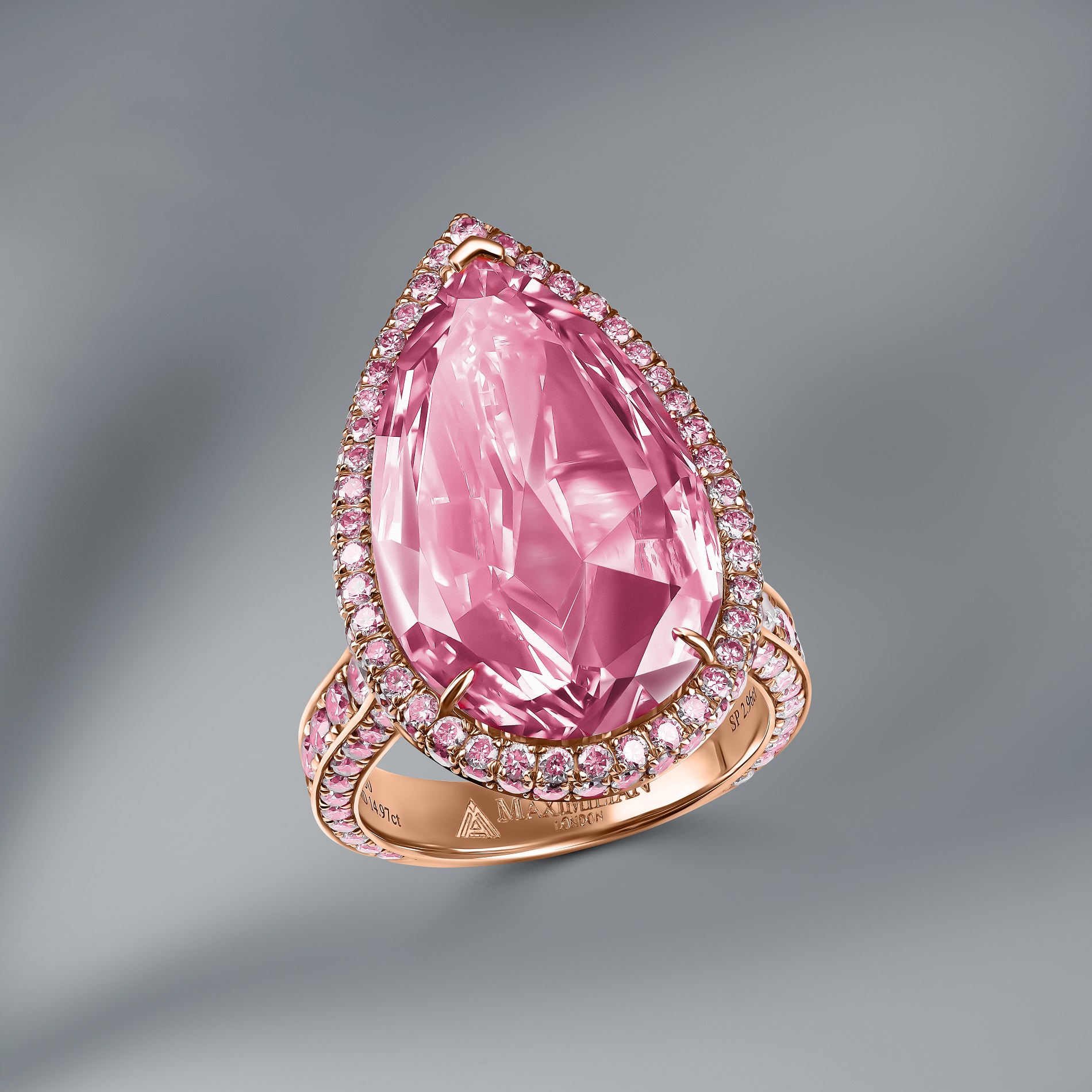
Colourless diamonds are cut for light return. Coloured diamonds follow another rule: GIA explains that they are usually cut to maximise the intensity of their colour rather than to maximise light return.
For pink diamonds, cutters generally aim for the most attractive face-up colour, the appearance GIA evaluates when grading colour.
Natural or treated colour
Pink can also be produced after mining. Gems & Gemology notes that type IIa and type IaB pinkish brown diamonds can be HPHT-treated to remove the brown component.
Both treated natural diamonds and treated laboratory-grown diamonds are altered to a pink colour by generating NV centres.
What the GIA report tells you
GIA's coloured diamond reports identify the shape and cutting style, carat weight and measurements of the diamond, and state whether any colour or clarity treatments are present.
GIA also issues a Colored Diamond Identification and Origin Report, limited to the colour grade and the origin of the colour, natural or treated.
Questions
What makes a pink diamond pink?
For about 99.5% of natural pink diamonds, an absorption band centred on 550 nm, which GIA links to plastic deformation of the crystal under high pressure and temperature. A very small number are coloured by nitrogen-vacancy centres.
Is a pink diamond a real diamond?
Yes. In a natural pink diamond the colour comes, in almost every case, from deformation of the diamond crystal itself. Pink colour can also be created by treatment, in natural or laboratory-grown diamonds, so the GIA report should state the colour origin.
How is the colour of a pink diamond graded?
GIA grades it face-up by hue, tone and saturation, using grades from Faint to Fancy Intense, Fancy Vivid, Fancy Dark and Fancy Deep.
What does purplish pink or brownish pink mean?
It describes a secondary hue. GIA notes that most pink diamonds show one, such as purplish pink, brownish pink or orangy pink.
Where do pink diamonds come from?
Historical sources include India, Brazil, Indonesia (Borneo) and southern Africa; pink diamonds have also been found in Russia and Tanzania. The Argyle mine in Australia, a leading producer, closed in 2020.
Sources
- Why Are Pink Diamonds Pink? (GIA)
- Natural-Colour Pink, Purple, Red and Brown Diamonds (Gems & Gemology)
- Converge Speakers, Winter 2025 (Gems & Gemology)
- Geographic Origin of Diamonds (Gems & Gemology)
- Reasons for a Pink Diamond Engagement Ring (GIA 4Cs)
- Coloured vs D-to-Z Diamond Grading (GIA FAQ)
- Fancy Colour Diamond Buyer's Guide (GIA)
- 20 Years of the GIA Coloured Diamond Grading System (GIA 4Cs)
- Natural Coloured Diamond Reports (GIA)
- Three Kinds of GIA Coloured Diamond Reports (GIA FAQ)
