

Bespoke jewellery: the stages, the timeline and what to prepare
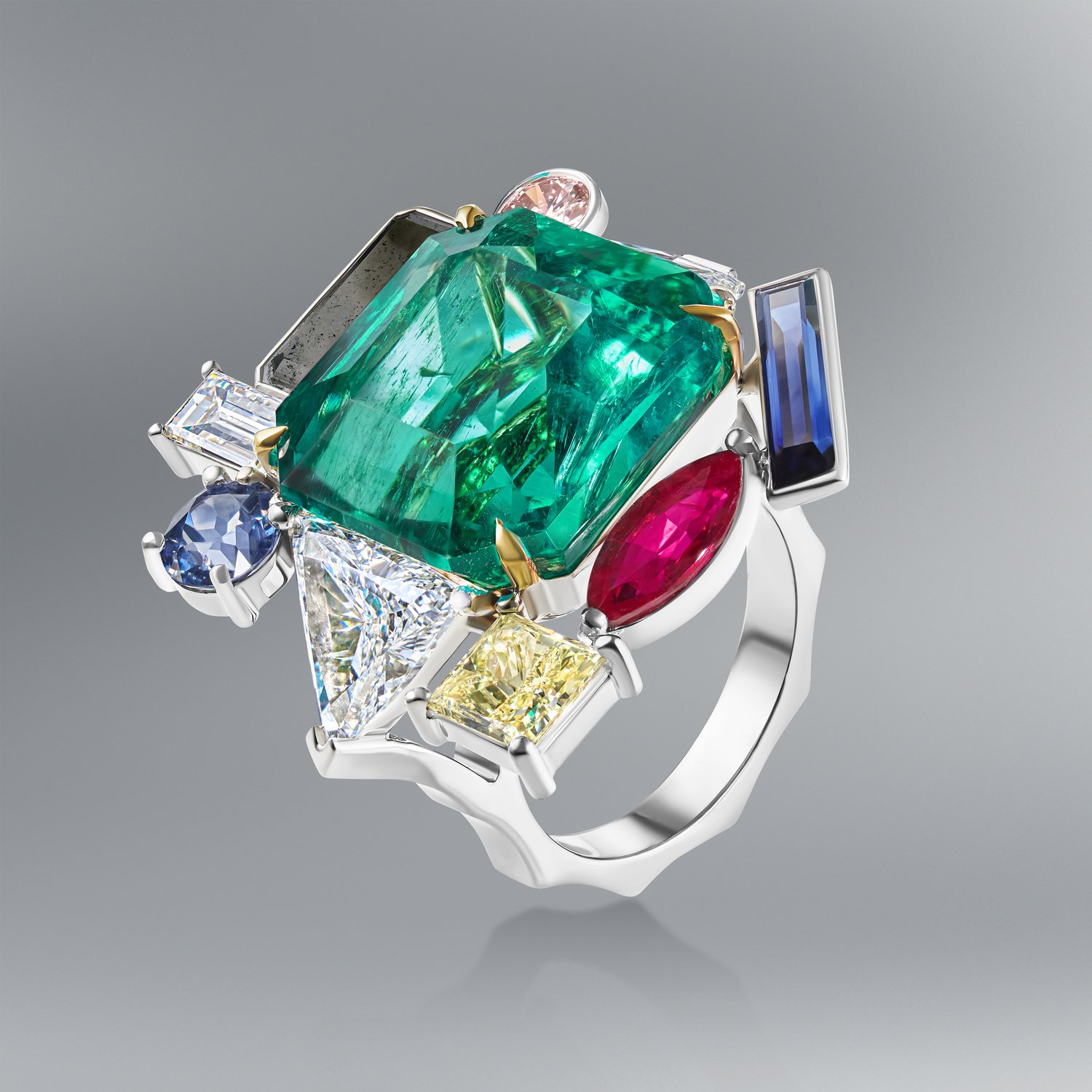
A bespoke jewel can be developed from a drawing and a CAD design with photorealistic renderings into a printed resin or carved wax model, cast in gold or platinum by the lost-wax method, then set with stones, polished and checked in a final quality control. In the UAE, gold and platinum carry a hallmark of type and fineness, subject to statutory exemptions. The timeline varies with the complexity of the design. Before the first meeting, gather references, have the finger sized with gauges and ask for the grading report of the principal stone.
From the first conversation to the drawing
Every bespoke piece begins as an idea that must become a drawing. Traditionally, jewellers used the drawing to either hand-fabricate the piece in metal or carve it in wax.
A drawing can be developed further in computer-aided design. CAD makes it possible to create photorealistic renderings of a three-dimensional design, so its proportions and the planned placement of the stones can be reviewed before metal fabrication begins.
A model before the metal
From the CAD model, a 3D printer can produce a resin prototype that is made to be cast. In the traditional method, the model is carved by hand in wax.
The model is the bridge to lost-wax casting. The wax model is encased in plaster and placed in an oven; once the wax has burned away, molten precious metal, such as gold or platinum, is poured into the cavity it leaves.
The stone and its report
The principal stone deserves its own documentation. For a diamond, a GIA Diamond Grading Report gives a full 4Cs assessment with a plotted clarity diagram.
GIA grades diamonds and does not assess their value; the document it issues is a report. Each report carries a unique number that can be checked in GIA Report Check, GIA's online report database, to confirm that the diamond was graded by GIA and to view its grading details.
Setting, polishing and finishing
In conventional casting, the piece is prepared for stone setting after casting, the stones are set, and the jewel receives its final polish and a final quality control. Some casting, however, is done with stones such as diamond, sapphire and ruby already set in the wax.
Polishing is a process of its own: for platinum, multiple steps and grades of abrasive compounds are required. White gold is usually plated with rhodium for a whiter look and a better shine, and that plating wears gradually over time, so the piece needs to be replated occasionally.
- Prongs: narrow strips of metal that rise from the base of the setting and bend over the edges of the stone to hold it in place.
- Pavé: small stones secured with tiny beads or prongs of metal, so that the surface appears covered with diamonds or other gemstones.
The hallmark
In the UAE, federal law provides for stamping precious metals with a mark indicating their type, legal standard of fineness and level of purity. Among the statutory exemptions are articles of gold or platinum weighing less than one gram.
In Dubai, precious metals testing and hallmarking is among the accredited fields of the Dubai Central Laboratory.
What to prepare before the first meeting
The clearer the brief, the more precise the first drawing. A few things are worth preparing in advance.
One point deserves attention early. Rings set with diamonds around the entire band, such as eternity rings, can be very difficult to resize, so for these designs the finger size should be settled before the drawing is final.
- Images of pieces, shapes or details that you are drawn to.
- Your ring size, measured with a set of finger gauges, the most accurate method.
- The stone you have in mind, or the colour and shape you are looking for.
- The metal: yellow, white or rose gold, or platinum.
- For a diamond, its grading report, or a request to see one.
Questions
How is a bespoke jewel made?
Typically, the design is drawn and developed in CAD with photorealistic renderings, and a resin or wax model is produced and cast in gold or platinum by the lost-wax method. The piece is then prepared for setting, set with stones, polished and checked in a final quality control.
How long does a bespoke piece take?
There is no single answer. The timeline varies with the complexity of the design and with the methods used to make it, from drawing and model to casting, setting and finishing.
What does a GIA report show for a diamond?
A GIA Diamond Grading Report gives a full 4Cs assessment with a plotted clarity diagram. GIA grades diamonds and does not assess their value. The report number can be checked in GIA Report Check to view the grading details.
Can an eternity ring be resized later?
It can be very difficult to resize a ring with diamonds around the entire band. The finger size is best measured with finger gauges before the design is finalised.


Sources
- How Technology Is Changing Jewelry Design (GIA 4Cs)
- Jewelry Design: CAD/CAM program (GIA)
- Shenzhen, China: gem and jewelry industry (GIA News from Research)
- Diamond Grading Report (GIA Laboratory)
- What is a GIA Diamond? (GIA 4Cs)
- Guide to Ring Settings (GIA 4Cs)
- Prefinish, polish and buff platinum (GIA Quality Assurance Benchmark)
- White, Yellow or Rose Gold Engagement Rings (GIA 4Cs)
- How to Pick the Right White Metal for an Engagement or Wedding Ring (GIA 4Cs)
- Federal Law Concerning Monitoring Trade in Precious Stones, Precious Metals; and its Stamping (UAE Legislation)
- Dubai Central Laboratory: accreditation fields (Dubai Municipality)
- How to Determine Ring Size (GIA 4Cs)
