

How to choose an engagement ring in Dubai
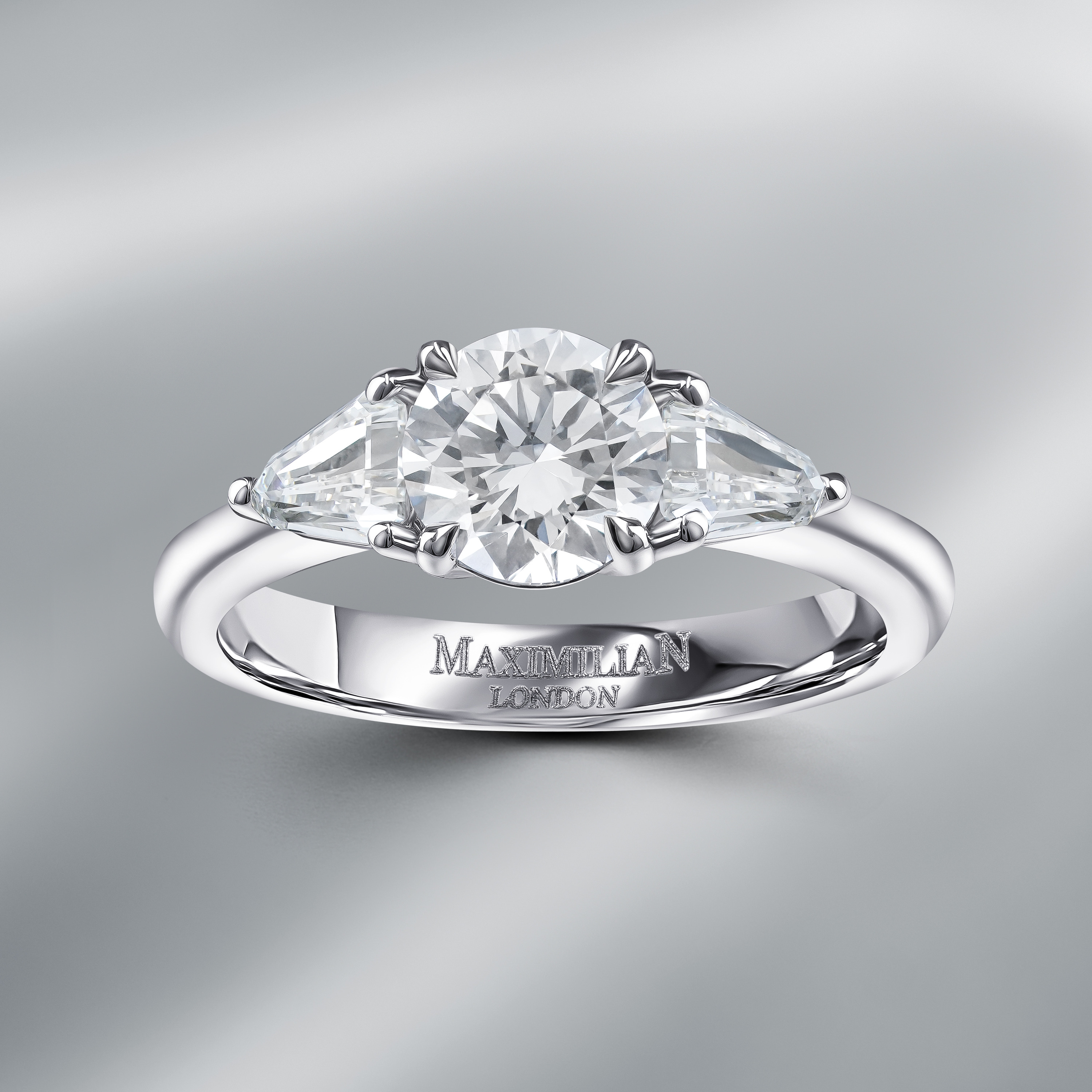
Choose the diamond first by its 4Cs: colour, clarity, cut and carat weight, documented in an independent laboratory report such as a GIA report, which you can confirm online with GIA Report Check. Ask whether the stone is natural or laboratory-grown, since traditional gemmological observation cannot tell them apart. Then choose a setting that protects the stone, have the finger sized properly, and check the gold: under UAE federal law 18 karat gold has a millesimal fineness of 750, and hallmarking marks the metal's type and purity.
Begin with the diamond: the 4Cs
Colour, clarity, cut and carat weight are collectively called the 4Cs of diamond quality. Together they form the shared language in which a diamond is described, in Dubai as anywhere else.
Colour measures a diamond's absence of colour and is graded on a D-to-Z scale. Clarity is judged by the number, size, relief, nature and location of a stone's inclusions and blemishes, viewed at 10x magnification. Carat measures weight, not size: a metric carat is defined as 200 milligrams.
Cut is the proportion, shape and arrangement of facets that determine a diamond's brilliance, sparkle and fire. For standard Round brilliant diamonds in the D-to-Z colour range, GIA gives an overall cut grade on a five-point scale: Excellent, Very Good, Good, Fair or Poor.
The report that travels with the stone
A GIA Diamond Grading Report evaluates a diamond using the 4Cs, along with other identifying characteristics. It is the document to ask for before anything else is discussed.
GIA also offers optional laser inscription with its reports, where the report number is inscribed on the diamond's girdle. With GIA Report Check, the information on a report can be confirmed against what is archived in the GIA report database.
- Ask for the report itself, not a description of it.
- Check that the report number matches any inscription on the girdle.
- Confirm the report through GIA Report Check.
Natural or laboratory-grown
A laboratory-grown diamond possesses essentially the same chemical, physical and optical properties as its natural counterpart. The difference is one of origin, and it cannot be seen by eye: traditional gemmological observation and instrumentation are not able to tell the two apart.
When a diamond is submitted to GIA, the laboratory examines its inclusions, graining, reaction to ultraviolet light and other characteristics to determine whether it is natural or laboratory-grown. This is one more reason the report matters.
A setting chosen for everyday life
A ring setting is the metal mounting of a ring: the parts that hold the gemstone in place and the band that wraps around the finger. An engagement ring is worn every day, so the setting is as much about protection as about style.
Diamond is the hardest gemstone, but not necessarily the toughest. It resists scratching and abrasion, yet it can be cleaved or fractured by a hard blow, and the right mounting is its first line of defence.
- Prongs: narrow metal supports, usually in groups of four to six, that hold the stone securely in place.
- Bezel: a rim of metal that wraps around the sides of the diamond and protects it from accidental knocks.
- Halo: tiny gemstones, usually diamonds, set around the centre stone in pavé, adding sparkle and giving the appearance of a larger centre stone.
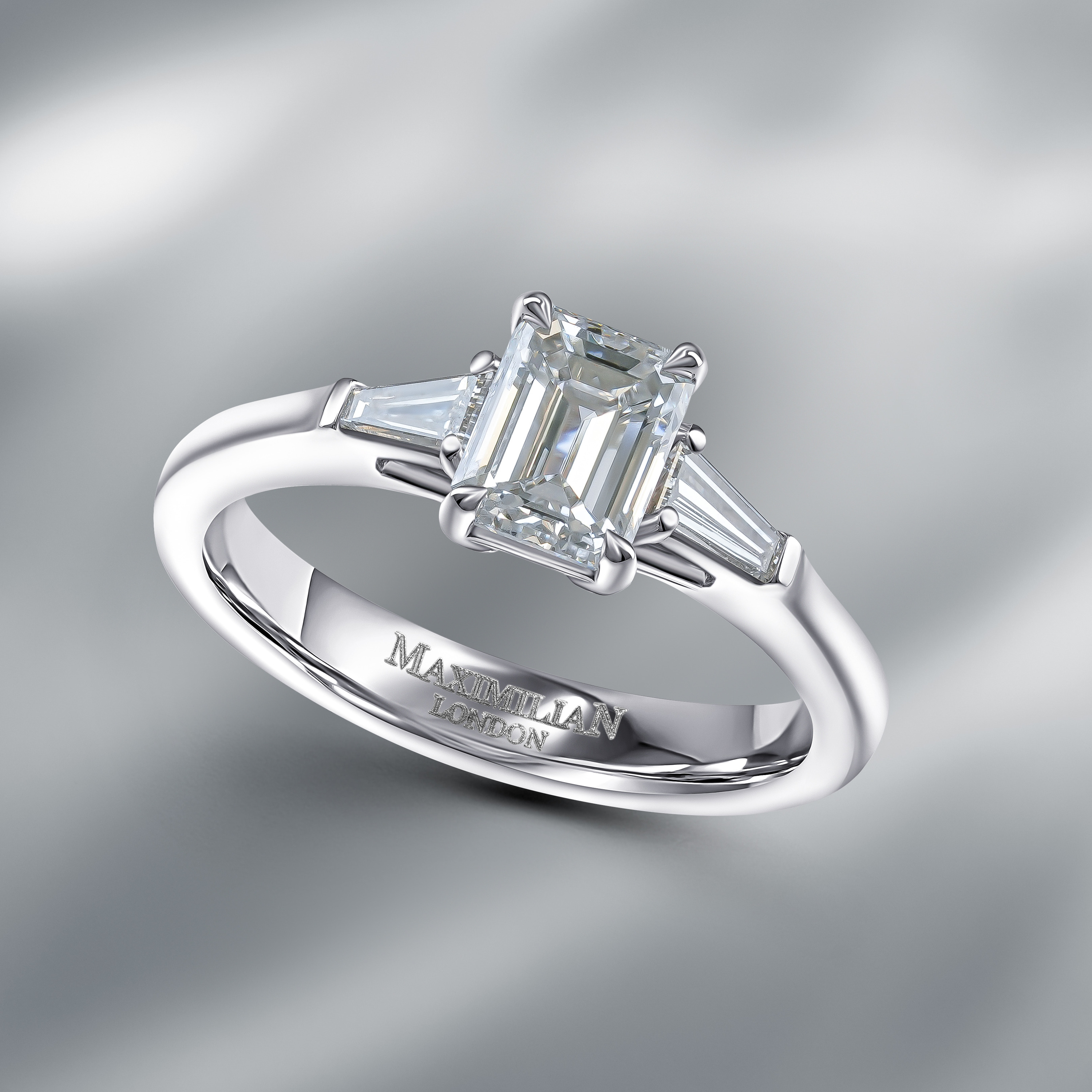
- Three stone: typically three diamonds of the same shape, the centre diamond larger than the two side stones.
The right fit
An engagement ring should be sized with care. Width changes how a ring fits: GIA's guidance is to measure a ring wider than 4 mm with wide-finger sizing gauges, and never to force the gauge over the joint.
Gold and hallmarks under UAE law
The UAE regulates the trade in precious metals and stones by federal law. The law sets the legal standards of fineness for gold jewellery: 18 karat gold, for example, has a millesimal fineness of 750, that is, 750 parts of pure gold per thousand.
Hallmarking, in the words of the law, is stamping precious metals with a mark indicating their type, legal standard of fineness and level of purity. For stones, jewellery or wrought precious metals that cannot be hallmarked, the law provides for an identification card attached to the piece, with the identification details of its stones and metals.
Your rights as a buyer
UAE consumer protection law gives buyers the right to obtain correct information about the goods they purchase. For an engagement ring, that means a clear account of the diamond, its report, the metal and its purity.
Dubai also has a long-standing place in the diamond trade. The UAE was the first Arab nation to join the Kimberley Process, in 2003, with DMCC the only entry and exit point for rough diamonds in the country.
A considered choice
Read the 4Cs on the report, confirm the report, ask about origin, choose a setting that suits daily life, and check the hallmark on the gold. A ring chosen this way is understood as well as admired.
Questions
What should I check first when buying an engagement ring in Dubai?
The diamond and its report. A GIA Diamond Grading Report evaluates the stone by its 4Cs, colour, clarity, cut and carat weight, along with other identifying characteristics, and GIA Report Check confirms that the information on the report matches what is archived in the GIA report database.
How can I tell whether a diamond is natural or laboratory-grown?
Not by eye. Laboratory-grown diamonds are essentially the same chemically and optically as natural ones, so traditional gemmological instruments cannot separate them. A laboratory such as GIA examines inclusions, graining and reaction to ultraviolet light to determine the origin.
What does 18K mean on a ring in the UAE?
Under UAE federal law, 18 karat gold has a millesimal fineness of 750, meaning 750 parts of pure gold per thousand. Hallmarking stamps the metal with a mark indicating its type, legal standard of fineness and level of purity.
Which setting best protects a diamond in an engagement ring?
A bezel setting wraps around the sides of the diamond and protects it from accidental knocks. Prongs, usually four to six, hold the stone securely in place. Diamond resists scratching, but a hard blow can still chip or fracture it.


Sources
- What are the 4Cs of diamond quality? (GIA FAQ)
- Diamonds Graded by GIA (GIA)
- How to Select a Round Diamond Engagement Ring (GIA 4Cs)
- How to Buy a Diamond (GIA 4Cs)
- Diamond Carat Weight (GIA 4Cs)
- Understanding Diamond Cut Grades on GIA Reports (GIA 4Cs)
- GIA Diamond Cut Grade: Six Things to Know (GIA 4Cs)
- How to Choose a Marquise Diamond (GIA 4Cs)
- Diamond Anatomy (GIA Interactive 4Cs)
- Report Check (GIA)
- The Difference Between Natural and Laboratory-Grown Diamonds (GIA)
- How does GIA identify laboratory-grown diamonds? (GIA FAQ)
- Laboratory-Grown Diamond Reports (GIA)
- Guide to Ring Settings (GIA 4Cs)
- How to Buy a Three-Stone Engagement Ring (GIA 4Cs)
- Buying a Diamond Engagement Ring: Questions a Jeweler Will Ask (GIA 4Cs)
- How to Purchase the Perfect Diamond Engagement Ring (GIA)
- More Than Mohs: Gem Durability (GIA 4Cs)
- Accurate Determination of Finger Ring Size (GIA)
- Federal Law Concerning Monitoring Trade in Precious Stones, Precious Metals; and its Stamping (UAE Legislation)
- Consumer protection (UAE Government portal)
- Kimberley Process (DMCC)
