

Tennis bracelet: 3, 5 or 7 carats
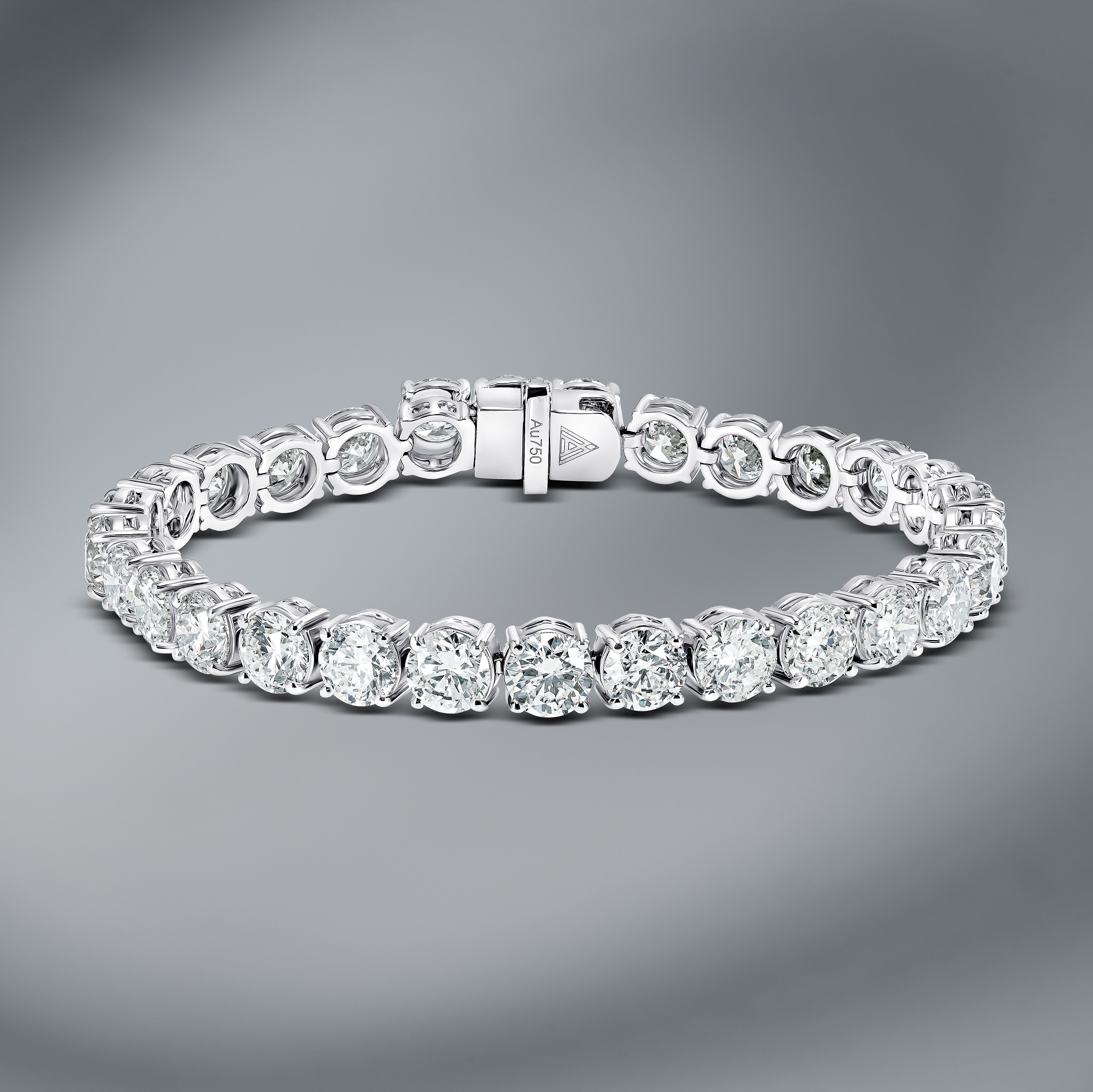
The figure on a tennis bracelet is its total carat weight: the combined weight of every diamond in the line, where one carat is 200 milligrams. Three, five or seven carats can describe bracelets of the same length, but the number, weight and dimensions of the individual diamonds determine how each one looks on the wrist. Choose the weight together with the size and matching of the stones, a GIA report, a protective setting, a clasp with a safety latch and a fit that leaves room for one finger.
What the number on a tennis bracelet means
A tennis bracelet is a flexible band with a continuous line of individually set diamonds or gemstones that encircles the wrist. The name was popularised in the 1980s, after a diamond bracelet was lost during a match at the U.S. Open.
Carat measures weight, not size, and a metric carat is defined as 200 milligrams. Carat weight refers to a single stone; total carat weight, abbreviated tcw, is the combined weight of all the diamonds in a piece. When a tennis bracelet is described as three, five or seven carats, it is this total that is meant.
Three, five or seven: the same line, different stones
The total divides across every stone in the line. Spread over forty diamonds, three carats average 0.075 carat a stone, five carats 0.125 and seven carats 0.175. A higher total may reflect larger individual diamonds, a different number of stones, or both.
Weight is not the whole picture. A heavier diamond does not always appear larger, and for round diamonds graders relate carat weight to diameter when they assess cut. For a line of stones, size consistency matters as much as the total: GIA notes that small diamonds differing by as little as 0.20 millimetres may be noticeable, and that selecting similar sizes is important where uniformity is part of the design.
Matching colour and clarity
Melee diamonds are sorted by colour and clarity before being packaged into parcels for jewellery manufacturers. In a tennis bracelet the diamonds run in a continuous line: selecting stones of similar size helps create a uniform appearance, while colour and clarity are further considerations when matching them.
The round brilliant is the most popular cut for tennis bracelets, valued for its exceptional ability to reflect light.
The GIA report
Fine tennis bracelets may be accompanied by GIA reports, which give an independent evaluation of the stones. A GIA Diamond Grading Report assesses an individual diamond: a full quality assessment with polish, symmetry and fluorescence, and a cut grade for standard round brilliants.
A GIA Jewelry Report assesses the mounted piece: the number of stones, shape, estimated carat weight, colour range and clarity range, to the extent that the mounting permits. For small diamonds, GIA has developed an automated system to screen and sort melee-size stones for laboratory-grown and treated diamonds.
Setting and clasp
The prong setting is the most popular choice for tennis bracelets: small metal claws hold each stone and let light enter from the sides. A four-prong setting shows more of the diamond, while a six-prong setting is often more secure. A bezel setting surrounds the stone with a thin metal rim and offers maximum protection. In a channel setting the stones sit in a continuous row between two parallel metal strips, without individual prongs.
Tennis bracelets include secure clasps, often with safety latches. For a bracelet that will be worn every day, GIA suggests a reliable clasp and a protective setting such as bezel or channel, which helps shield the stones from knocks.
Width, fit and metal
Tennis bracelets range from slim, delicate strands to bold bands. Total carat weight alone does not determine how wide the line will appear: the number and dimensions of the diamonds, together with the setting, also shape the bracelet.
A tennis bracelet should allow you to fit one finger between the wrist and the bracelet. White gold is typically plated with rhodium for its bright white finish, and the plating may need renewing every few years.
Caring for a tennis bracelet
Regular care means gentle cleaning with mild dish soap and a soft toothbrush, together with periodic inspection of the settings. Open designs with prongs benefit from regular checks that every stone remains secure.
Ultrasonic and steam cleaners can loosen stones in their settings, which is why professionals examine a piece for loose stones before using them. Harsh household chemicals can erode setting metals and loosen prongs.
At MaximiliaN London
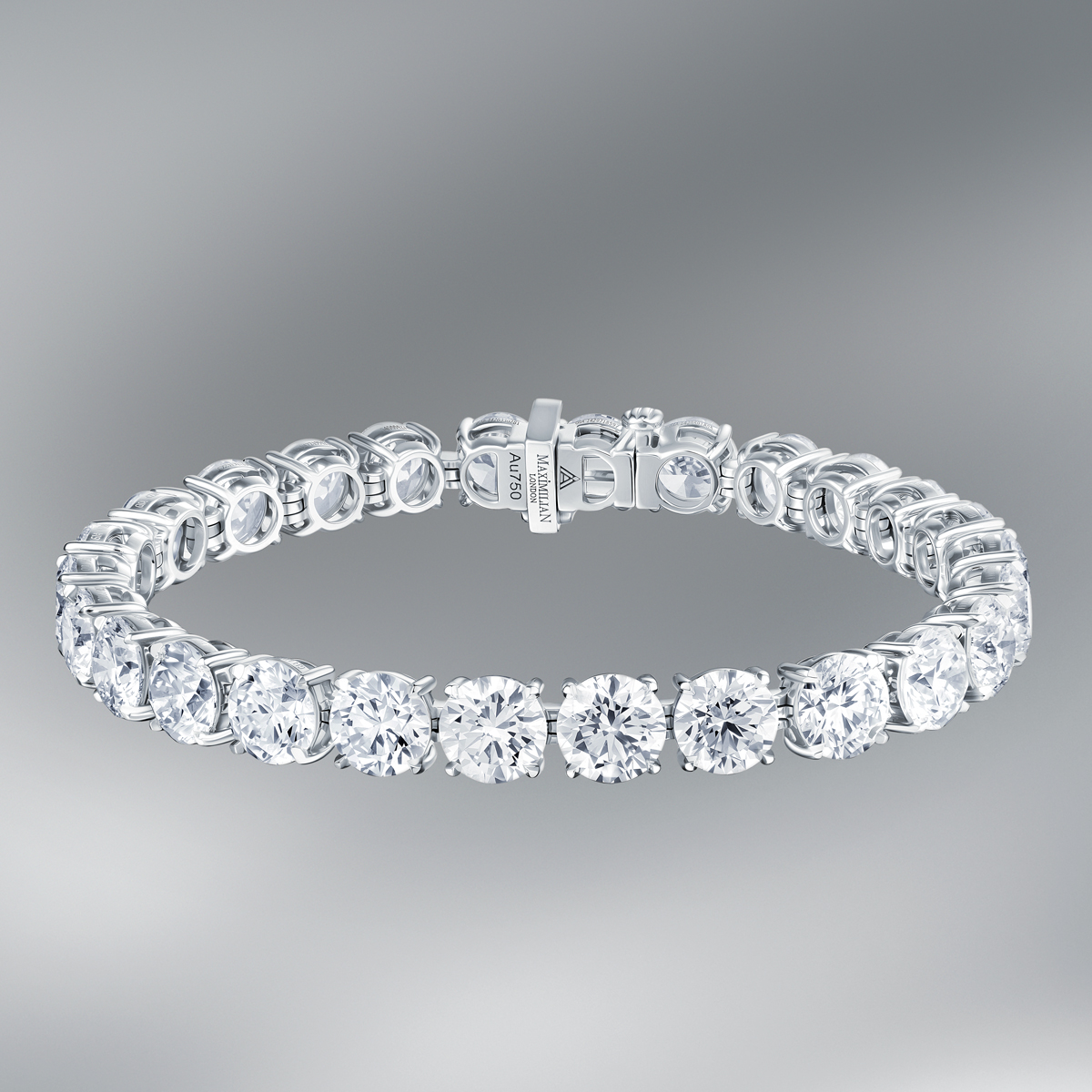
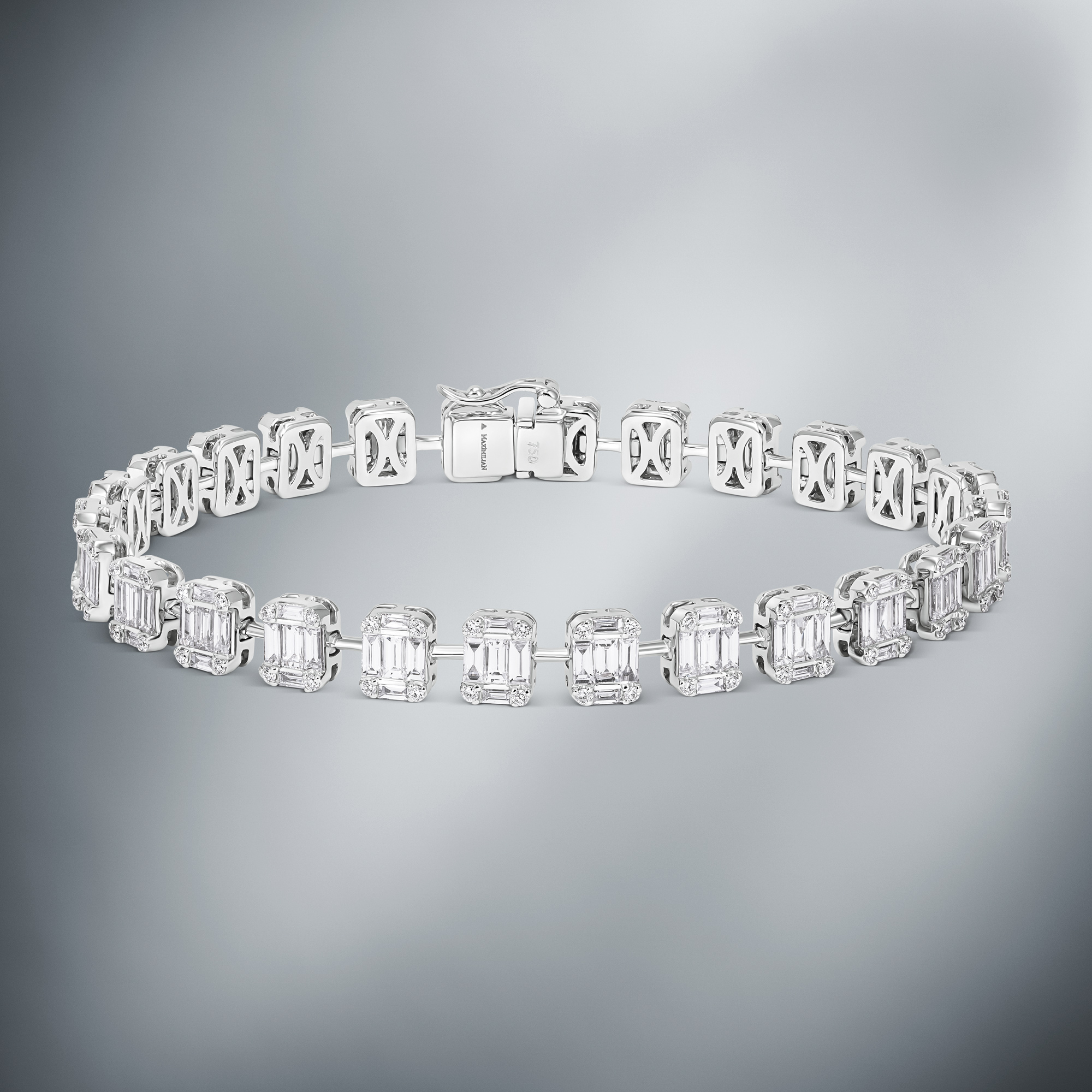
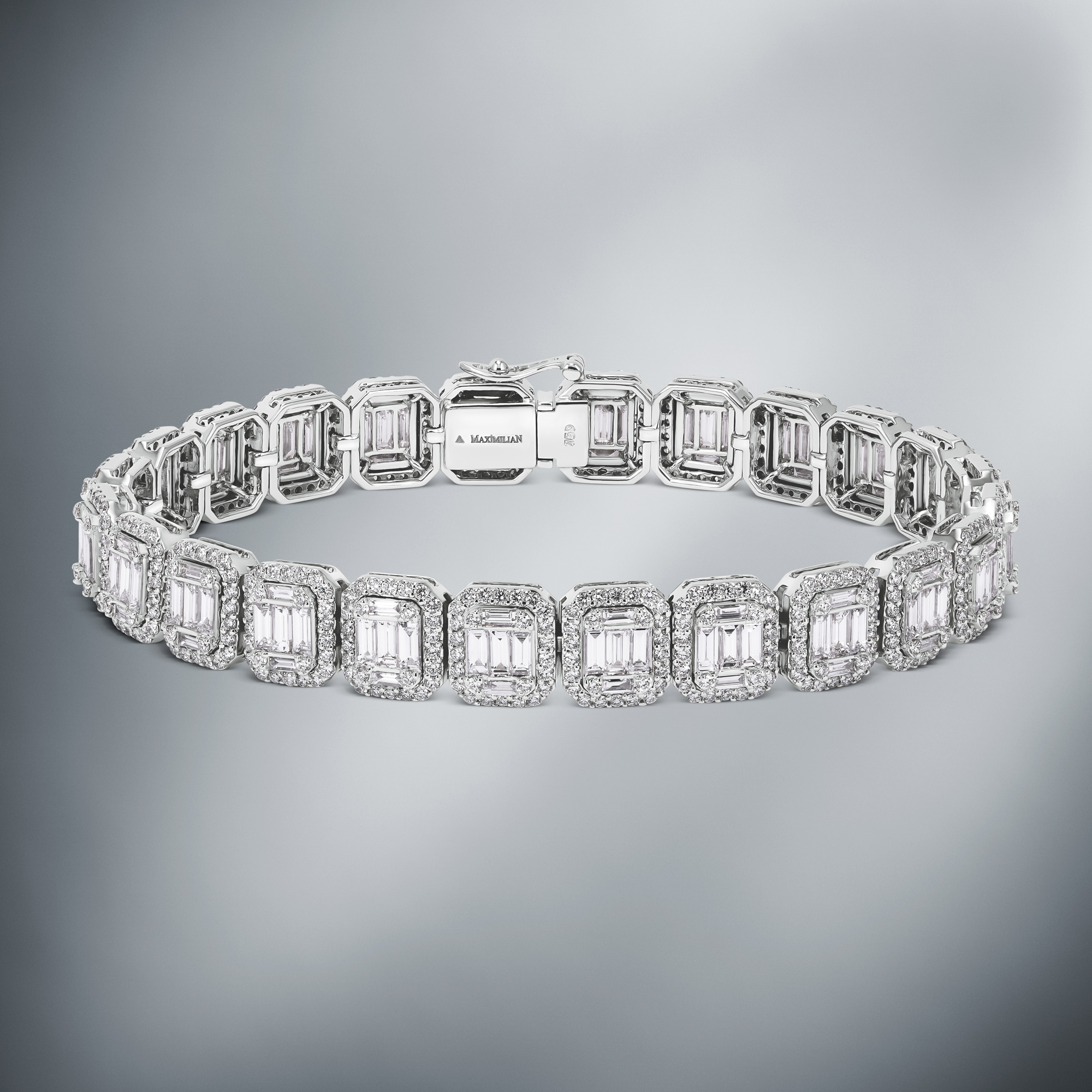
Our diamond tennis bracelets show how the same idea changes with weight: thirty-two round brilliant-cut diamonds totalling 16.21 carats in D-F colour, and a line of 26 round brilliant-cut diamonds totalling 26.48 carats over 17.50 cm, accompanied by GIA reports. Alongside them are diamond bracelets of 5.07 and 7.60 carats in 18K white gold. Private viewings are arranged at our boutique in The Dubai Mall.
Questions
What does total carat weight mean on a tennis bracelet?
It is the combined weight of all the diamonds in the bracelet. One carat is 200 milligrams, and carat weight describes a single stone, while total carat weight, abbreviated tcw, describes all of them together.
Is a 7-carat tennis bracelet bolder than a 3-carat one?
On bracelets of the same length, a higher total carat weight may reflect larger individual diamonds, a different number of stones, or both. The appearance also depends on the dimensions of the diamonds and the setting, and a heavier diamond does not always look larger.
Does a tennis bracelet come with a GIA report?
Fine tennis bracelets may be accompanied by GIA reports. A GIA Diamond Grading Report assesses an individual diamond, while a GIA Jewelry Report assesses the mounted piece, documenting the number and shape of the diamonds, estimated carat weight, colour range and clarity range, to the extent that the mounting permits.
Which setting is the most secure for a tennis bracelet?
A bezel setting offers maximum protection, and a channel setting holds the stones in a row between two metal strips. The prong setting is the most popular and lets in the most light. Whatever the setting, choose a clasp with a safety latch.
How should a tennis bracelet fit?
You should be able to fit one finger between the wrist and the bracelet.
Sources
- Tennis Bracelet Buying Guide (GIA 4Cs)
- Diamond Carat Weight (GIA 4Cs)
- Understanding Carat Weight on GIA Reports (GIA 4Cs)
- Nine Things About Diamond Carat Weight (GIA 4Cs)
- How to Select a Round Diamond (GIA 4Cs)
- Understanding Diamond Cut Grades on GIA Reports (GIA 4Cs)
- Design with Melee (GIA)
- Melee Diamonds: Tiny Diamonds, Big Impact (GIA 4Cs)
- Diamond Grading Report Service (GIA)
- Jewelry Report Service (GIA)
- Jewelry Services (GIA)
- Melee Analysis Service (GIA)
- Popular Setting Styles (GIA 4Cs)
- Guide to Ring Settings (GIA 4Cs)
- Diamond Care and Cleaning (GIA)
- How to Clean Your Diamond Jewelry (GIA 4Cs)
